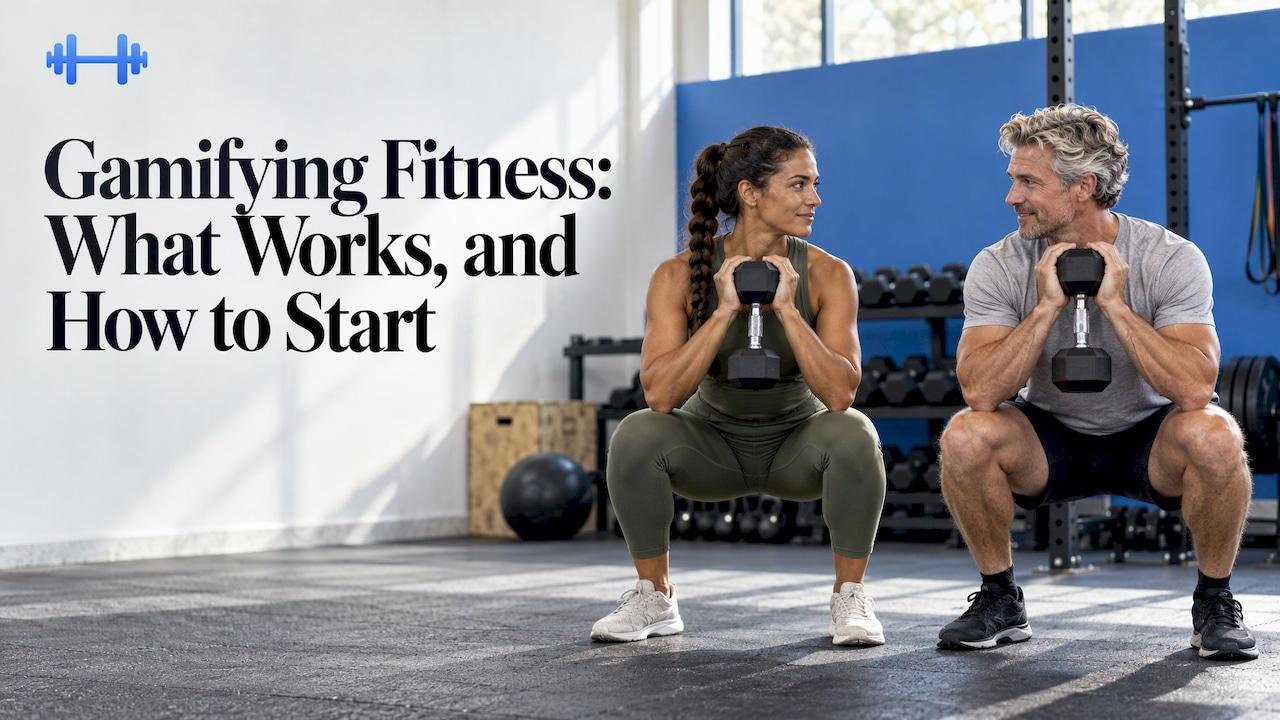
Gamifying fitness means borrowing mechanics from games, such as goals, points, challenges, leaderboards and shared team targets, and attaching them to real training. The mechanics work best when they sit on top of a structured plan and honest tracking. A points system with nothing behind it fades in a few weeks. A program you log every session, with friends or a coach who can see the numbers, gives the game something to measure. That is why we built GymCoach to put programs, workout logs, messages and feedback in one place, with friends and leaderboards for the social side.
TL;DR
- Gamification adds game mechanics (goals, challenges, rankings, team targets) to exercise. Harvard Health describes it as motivation through collaboration, competition and team spirit.
- A meta-analysis of 16 randomized trials found a small-to-medium boost in physical activity that was still present at follow-up, so it is more than a novelty effect.
- Social mechanics (support and friendly competition) tend to do the heavy lifting. Compare people with their own past numbers first and with each other second.
- To set it up, pick one measurable goal, log every session, add one social layer, and review weekly.
Table of Contents
- What gamifying fitness actually means
- What the research says about results
- The mechanics worth using, and who each suits
- Keeping it motivating and not stressful
- How to gamify your training, step by step
- What coaches gain from gamified coaching
- Where GymCoach fits
- FAQ
- Sources
What gamifying fitness actually means
Ordinary workout tracking records what happened: the weight, the reps, the time. Gamification adds a layer on top that gives those numbers a purpose and an audience. You are no longer just logging a set of squats. You are closing a weekly target, beating last month's total, or keeping pace with a training partner.
The research literature lists the building blocks. A 2026 scoping review of 53 randomized trials sorted 48 gamification elements across 8 motivational drives. It names points, levels, avatars and leaderboards among the most familiar. You do not need 48 elements. In practice, a handful covers nearly everything people use:
- Goals and milestones: a target for the week or the block.
- Progress feedback: charts and personal records that show movement.
- Challenges: a time-limited contest, solo or with others.
- Social layers: training partners, shared workouts, a leaderboard.
- Rewards: badges, points or something real you give yourself.
Notice what the first two items have in common: they need data. Gamification built on guesswork ("I think I trained four times last week") turns into an argument. Built on logged sessions, it turns into a scoreboard everyone trusts.
What the research says about results
The evidence is encouraging, and it is worth knowing how big the effect is so your expectations stay realistic.
A meta-analysis of 16 randomized controlled trials with 2,407 participants found a small-to-medium effect of gamification on physical activity (Hedges g of 0.42). The effect was still visible at follow-up, on average 14 weeks later, which the authors read as a sign that it is not just novelty wearing off.
A systematic review of 19 empirical papers on gamification for health reported that 59% found positive effects, with the evidence strongest for physical activity.
One of the clearest trials used steps. In a one-year randomized trial of 361 adults, the support and the competition versions of a gamified program raised daily steps by 503 and 606 compared with the control group. The group that only collaborated toward a shared goal did not move the needle significantly on steps.
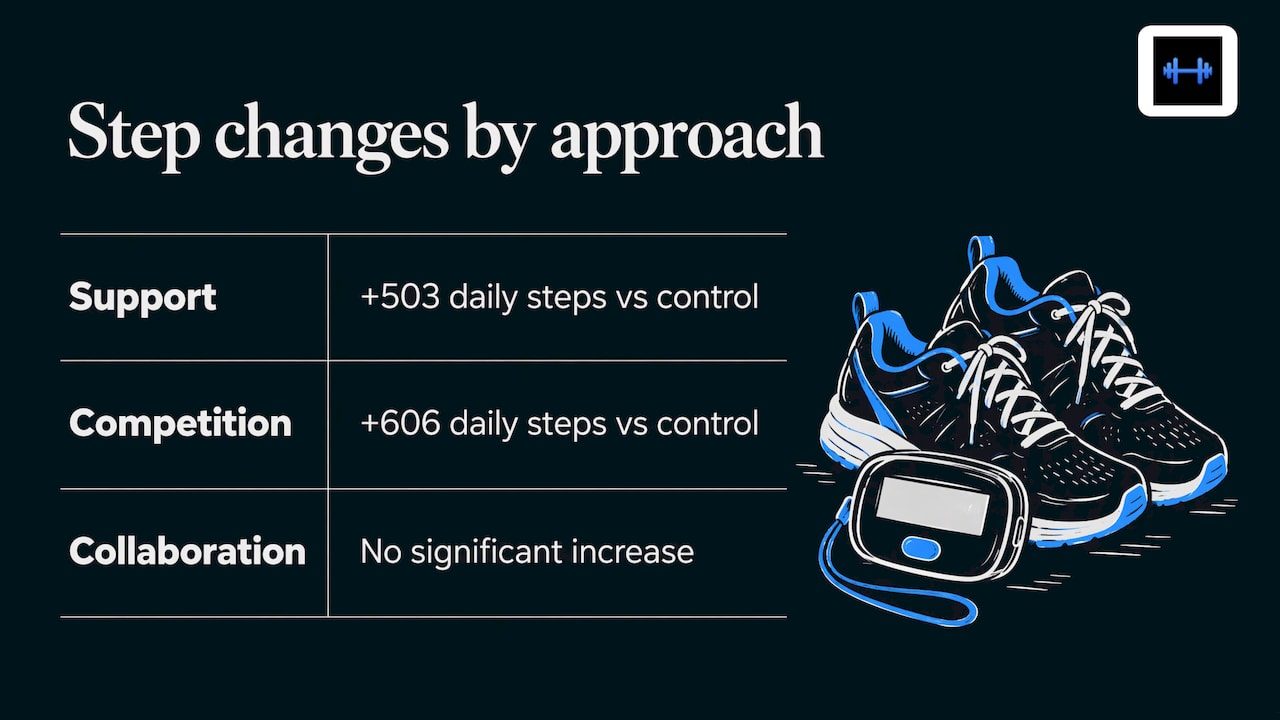
That last detail matters when you design your own version. It suggests that a bit of personal accountability, whether from a supporter or from a friendly rival, is a stronger lever than a vague group target that anyone can coast on.
A nine-month trial analysis from the University of Antwerp adds another useful point about behavior. People with the gamified app used it on 113 days on average versus 81 days for those with the plain version, and leaderboards and status tiers were the most-viewed features. Consistent logging is what makes everything else possible, and game mechanics seem to help with exactly that.
The mechanics worth using, and who each suits
Different readers need different mixes. Here is how the main mechanics line up.
| Mechanic | What it does | Best for |
|---|---|---|
| Weekly target | Turns a plan into a clear finish line | Athletes following a program |
| Progress charts and personal records | Shows improvement over weeks | Everyone, especially lifters |
| Challenge with a start and end | Creates urgency and a shared moment | Coaches with several clients, friend groups |
| Leaderboard | Adds friendly rivalry | Friends who already enjoy competing |
| Check-ins | Creates a rhythm of reporting and response | Coach and athlete pairs |
| Real-world reward | Marks a milestone | Individuals who respond to treats |
The 2021 review of 103 gamified step apps found the most common combination was social influence, challenges and competition, with social influence the single most common element. Designers keep arriving at the same conclusion: people respond to other people.
The same review separates two kinds of reward. Completion rewards pay out when you hit a set threshold, like a daily step goal. Performance rewards, such as a ranking, keep scaling with how much you do. Combining both gives you a floor to reach and a reason to go past it.
Goals and progress feedback
Across 26 studies of gamified wearable trackers, every one included goal-setting and self-monitoring. Treat these two as the foundation, not the decoration. Pick one number that matters for the next four weeks, such as sessions completed, total volume on a main lift, or weekly steps, and watch it on a chart.
Competition, cooperation or both
Research on this is genuinely nuanced. The same wearable review notes that in one 24-week trial, a pure group-goal setup scored lowest on activity, while another study found increases in both cooperation and hybrid cooperation-and-competition setups. A longitudinal field experiment with a fitness app reached a similar point: cooperation and interpersonal competition produce different outcomes on their own, and combining them in a team-versus-team format can capture both.
The practical lesson is simple. For a group of friends, split into two small teams and keep individual numbers visible. Everyone then has a personal stake and a team to support.
Keeping it motivating and not stressful
Gamification should make training feel better, not turn it into a source of pressure. Several sources point the same way.
The SAAFE framework for organized physical activity recommends self-comparison over peer-comparison, point systems that reward team values and not only winning, offering choices, and never using exercise as punishment. These are good rules for a coach's roster as much as for a youth sports club.
The wearable review also draws a line that is easy to apply. When people exercise with others out of real interest, social features support intrinsic motivation. When the leaderboard itself becomes the reason to show up, interest in the activity itself can fade. So keep the game in service of the training:
- Reward effort and consistency, not only the biggest numbers. A challenge for "most sessions completed" lets a beginner win against an advanced lifter.
- Compare people with their own history. Personal records and trend charts do this by default.
- Give people choices. Let athletes pick between two challenge formats or opt out of the leaderboard.
- Keep sessions sensible. Never reward training through pain or through skipping rest. Rest timers and effort ratings (RPE, a 1 to 10 scale of how hard a set felt) keep intensity honest.
A systematic review of 35 studies found that autonomy-supportive behavior from exercise professionals helps people feel competent and more self-driven, which predicts longer persistence in exercise. For coaches, that means offering options and explaining the why behind a target instead of just assigning it.
How to gamify your training, step by step
This works whether you train alone, with a friend, or run a roster of clients.
1. Start with a structured plan
A game needs rules, and in fitness the rules are your program: which lifts, how many sets, how often. If you are still building one, our guide to athletic performance training walks through it. Without a plan you have nothing meaningful to score. In GymCoach, coaches build and assign programs, and athletes can follow them and log each set, with RPE and rest timers built in.
2. Choose one measurable goal
Pick a single target for four weeks. Good examples: complete all planned sessions, add a set amount to a main lift, or hit a weekly step count. One goal is easy to rank, chart and celebrate. Five goals blur into noise.
3. Log every session
The scoreboard is only as good as the data behind it. Log sets as you go, not from memory at the end of the day. GymCoach tracks workouts and sets, shows progress charts, and syncs with Apple Health or Health Connect so training data from your phone or watch lands in one place. If you coach, our guide to tracking client progress covers what to measure and how often.
4. Add one social layer
This is the step with the strongest evidence behind it. Add a friend, a training partner or a small group. In GymCoach, athletes can connect with friends, share workouts and see leaderboards, so a few people can follow each other's progress without a group chat full of screenshots.
5. Run a time-boxed challenge
A challenge with a clear start, end and rule gives the group a shared moment. Our step-by-step plan for starting a fitness challenge covers format, length and scoring. Keep the first one short, and score consistency before raw performance.
6. Review weekly and adjust
Look at the chart, note what moved, and change one thing. Coaches can use check-ins and messages to respond while the week is fresh. A study of a Dutch coaching program with 53 employees found that people valued a professional's role in setting goals, while one-way communication undermined long-term engagement. Two-way feedback keeps the game alive.
What coaches gain from gamified coaching
If you coach several clients, the hard part is rarely the idea of a challenge. It is running it across spreadsheets and chat threads, where scores get lost and clients feel unseen. Gamification only helps when everyone's results are visible and current.
The Columbia Moves trial authors interpreted their findings as showing that gamified team elements created a heightened culture of accountability that prompted frequent tracking and syncing, as reported in their paper. Coaches can build the same culture by keeping logging, feedback and messaging in the same place the program lives.
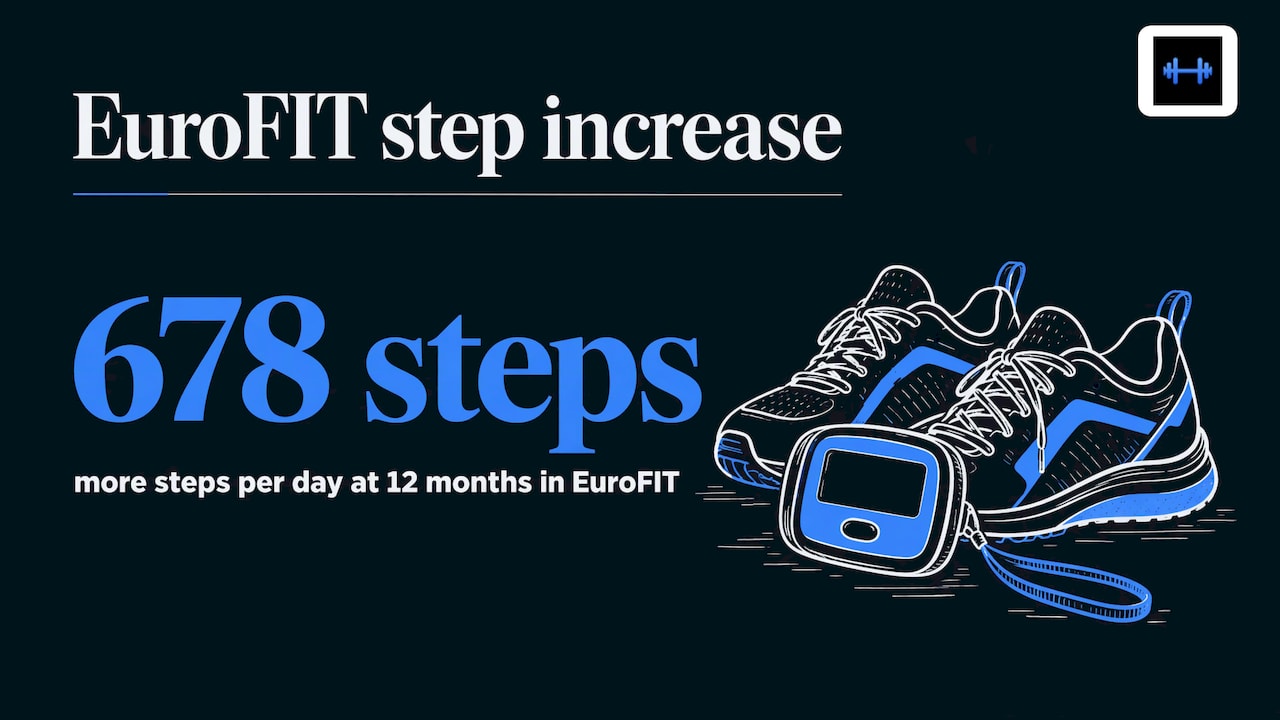
The EuroFIT trial of 1,113 men shows what a coach-led group format can do. It combined weekly coach-led sessions, goal-setting, self-monitoring and a team step comparison against a virtual rival, and steps rose by 678 per day at 12 months. It is a useful model: a coach, a clear goal, and a bit of team rivalry.
Where GymCoach fits
GymCoach is a web and iPhone coaching app for coaches and athletes. Coaches build and assign programs, manage a roster, ask intake questions, review check-ins and message athletes. Athletes log workouts and sets, see progress charts, browse an exercise library, train with friends, share workouts and see leaderboards. Athletes use the app for free, so a friend group can start without anyone paying.
Coaches pay for a plan based on roster size. The published plans are Starter at 19 EUR per month, Pro at 39 EUR per month, Business at 59 EUR per month and Unlimited at 79 EUR per month. You can see them on the pricing section, or look at the features first.

If you train with friends, the social features are the place to begin. If you coach, the coach tools show how a roster, programs and feedback fit together.
FAQ
Does gamifying fitness really work?
The evidence says it can help. A meta-analysis of 16 randomized trials found a small-to-medium increase in physical activity that persisted at follow-up about 14 weeks later. Results depend on the design, and social elements such as support and friendly competition look especially useful.
Do I need a special app to gamify my workouts?
You need a way to record sessions and see progress, plus someone to share it with. An app that holds your program, your logs and your friends or coach in one place makes that simple. GymCoach is free for athletes and includes friends, leaderboards and progress charts.
Is competition or teamwork better for motivation?
A mix tends to work well. Research shows that support and competition raised daily steps in one year-long trial, while pure group goals did not. Small teams with visible individual numbers give you both a personal stake and shared support.
How do I keep gamification from becoming stressful?
Compare people with their own past results first, reward consistency as well as top performance, and give choices. Never use exercise as punishment. Sports-safety guidance recommends self-comparison over peer-comparison for exactly this reason.
Can coaches use gamification with remote clients?
Yes. Shared goals, check-ins, a time-boxed challenge and a leaderboard all work at a distance, as long as the logs and feedback stay in one place. Two-way communication matters: the research on coached programs links one-way messaging with weaker long-term engagement.
Sources
- Harvard Health: If exercise feels like work, make it more like a game
- Gamification Elements in Physical Activity Interventions (scoping review)
- Evaluating the Effectiveness of Gamification on Physical Activity (meta-analysis)
- Gamification for health and wellbeing: a systematic review
- JAMA Network Open: Behaviorally designed gamification with social incentives
- University of Antwerp: 9-month gamified app trial analysis
- The Role of Steps and Game Elements in Gamified Fitness Apps
- Gamified Wearable Fitness Tracker for Physical Activity: A Review
- Explaining the Outcomes of Social Gamification
- SAAFE framework for organized physical activity
- Frontiers in Psychology: Interpersonal behavior and exercise motivation
- Promoting Occupational Health through Gamification and Coaching
- Columbia Moves: technology and gamification to increase adult physical activity
- EuroFIT trial: programme to improve men's sedentary time